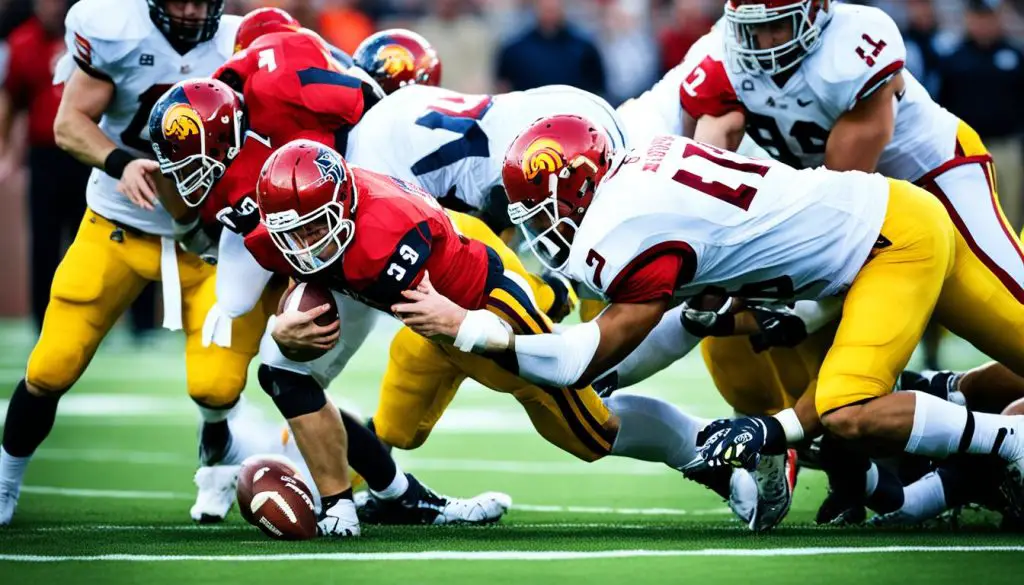
In the dynamic world of American football, strategies such as take a knee football and end game tactics often decide the outcomes of tightly-contested matches. Understanding the take a knee and run out the clock meaning is essential for any fan or player who wants to grasp advanced time management in sports and football game strategy. When moments are critical and the stakes are high, a team’s decision to kneel can be the difference between triumph and defeat.
As the clock winds down, players and spectators alike anticipate the unfolding of a carefully orchestrated move designed to safeguard a lead. We delve into the rationale behind this decisive maneuver, the sportsmanship it conveys, and its pivotal role in clock management within professional football. Stay tuned as we dissect a tactic emblematic of strategic sportsmanship and critical thinking on the gridiron.
Understanding the Strategy Behind Taking a Knee in Football
In the high-stakes environment of professional football, strategic decisions can make the difference between a devastating loss and a celebrated victory. One such decision is the tactical move known as taking a knee, which reveals much about the game strategy in sports, especially in the arena of end game management in football.
At the heart of this maneuver lies the intricate dance of clock management, a crucial aspect often overlooked by casual fans but revered by dedicated enthusiasts and strategists of the game.
Origins of the Quarterback Kneel in Clock Management
The act of taking a knee finds its roots in the concept of strategic timeout, where the play clock becomes as consequential as the scoreboard itself. The final minutes are a testament to a team’s ability to utilize time as an ally, deftly controlling the pace to secure a win.
The Role of Sportsmanship and Player Safety
Yet, beyond the scoreboard and the ticking clock, taking a knee embodies the spirit of sportsmanship gestures, showcasing respect not only for the game but for fellow competitors as well. This action serves as a clear signal—a silent handshake—that honors player safety and acknowledges an impending end with elegance.
Victory Formation: A Team’s Shield Against Turnovers
With a victory within reach, the formation of players that accompanies a kneeldown serves as a bulwark against the chaos of turnovers. The safety valve player, ready to pounce on any loose ball, is a symbolic and practical guard against last-minute upsets, encapsulating the meticulous nature of game strategy in sports.
In the arena of football, these moments of strategic thought shine brightly, illustrating a complexity that transcends physical prowess and enters the realm of intellectual mastery. As players and fans alike prepare for the conclusion of battle, it is these strategies such as the quarterback kneel that underscore the profound depth and beauty found within every snap of the game.
Take a Knee & Run Out the Clock Meaning in Game Context
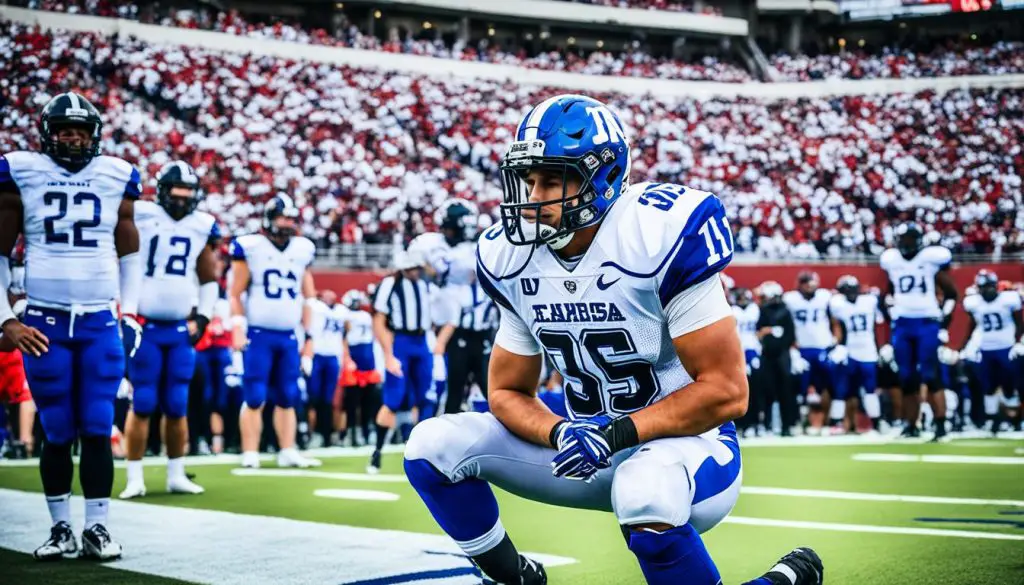
Mastering the intricacies of clock management football is crucial for teams aiming to seal a game’s result in their favor. The strategy of when to take a knee in football is layered and varies depending on the circumstances of the play. This tactic is not just about the act itself but understanding the sports terminology and logic behind the decision.
End of Half and Game Scenarios
When the clock ticks down, and the scoreboard leans in favor of one team, running out the clock definition comes into play. If a team is leading, and there are only a few seconds on the board, coaches might instruct their players to take a knee. This act prevents any last-minute turnovers and secures the win while conserving time.
Why Teams Choose to Kneel Despite Field Position
Complications can arise regardless of a team’s position on the field. It’s not unusual to witness a team deep in its own territory opt for a knee. In these cases, the potential for a high-reward offensive play is weighed against the risk of handing the opposition a lifeline through a costly error.
Real-World Examples and the Impact on Game Outcomes
Football history has its share of dramatic turns, where not choosing to take a knee has led to game-altering turnovers. In contrast, wise clock management has cemented many memorable victories, showcasing excellent game acumen and an understanding of when to harness the power of this strategic move.
Let’s examine why and when coaches implement this tactic:
| Time Remaining | Lead Margin | Remaining Defensive Timeouts | Risk Assessment |
|---|---|---|---|
| Less than 2 minutes | More than one possession | Zero to One | Low |
| Less than 1 minute | One possession game | Two or More | Medium |
| Less than 30 seconds | Single Score | None | Very Low |
| End of Half | Irrelevant | Variable | Based on Possession |
Ultimately, understanding the right moment to take a knee reflects a team’s expertise in football’s strategic underpinnings. Such a seemingly simple act can dictate the outcome of a game and signify a team’s dominance on the gridiron, echoing the significance of sports terminology in practical scenarios.
Conclusion
In the high-stakes arena of football, the integration of strategic game tactics such as taking a knee is more than a mere ritual—it’s a sophisticated expression of sports terminology that shows an acute awareness of clock management. This measured approach is not just about prolonging victory in sports; it encapsulates a whole ethos centered around sportsmanship gestures and the careful mitigation of risk. When the dust settles and the crowd’s roar fades, these moments crystallize the fine balance between aggression and restraint that defines the endgame in competitive sports.
As fans and enthusiasts delve deeper into the playbook of football, the understanding of the term “take a knee” elevates from a simple action to a grand strategic move infused with intention. It champions the safety of athletes, ensuring that the twilight of a hard-fought game does not become marred by injury or controversy. The gathering of players, the firm ground taken by the quarterback—all speak to an underlying respect for the game’s unwritten rules and camaraderie among athletes.
Perhaps most importantly, the choice to run out the clock by taking a knee, firmly anchored in the realm of end game tactics, offers a glimpse into the cerebral aspect of football that often goes unnoticed by the untrained eye. It’s here, in these critical closing moments, where the mettle of a team and the foresight of its coach are put to the ultimate test. And it is through this lens that we grow to appreciate the layer of strategic depth that football, in all its physical prowess, so uniquely provides.
FAQ
Q: What does ‘take a knee and run out the clock’ mean in football?
A: ‘Take a knee and run out the clock’ is a strategic action in American and Canadian football where the quarterback kneels immediately after receiving the snap, effectively ending the play. This is used predominantly at the end of the game or half to deplete the game clock and secure a lead, minimizing the risk of turnovers and managing the game time effectively.
Q: Why is taking a knee considered strategic in football?
A: Taking a knee is considered strategic because it aids in time management in sports. It allows the team in possession to maintain their lead by running down the clock and preventing the opposing team from having enough time to mount a comeback, making it a fundamental part of football game strategy.
Q: How does taking a knee relate to sportsmanship in football?
A: Taking a knee is not only a strategic move but also one that is associated with sportsmanship. It is seen as a respectful way to signal that a team does not intend to run up the score or risk unnecessary injury when victory is already secured. It shows consideration for the safety of all players and respect for the opposition.
Q: When in a football game is it most common to take a knee?
A: It is most common for teams to take a knee towards the end of a game, especially in the final minutes, when they hold a lead that the opposing team is unlikely to overcome. This is a key element of end game management in football and helps ensure a team’s victory with minimal risk.
Q: Can taking a knee be considered a form of clock management?
A: Absolutely, taking a knee is a critical component of clock management in football. By kneeling, the offense controls the clock, reducing the number of plays left in the game and limiting the opposing team’s time to have the ball, which is crucial in close games where every second counts.
Q: Why might a team choose to kneel despite being in a good field position?
A: A team might choose to take a knee even in a good field position when preserving the lead is more important than attempting to score additional points. This choice reflects an assessment of the risks of a turnover or other negative outcome against the benefits of running a normal play. End game tactics often prioritize the safe and sure path to victory over a potentially higher score.
Q: What is the role of the victory formation in football?
A: The victory formation is a specific alignment used by the offensive team when taking a knee to run out the clock. This formation is designed to protect the quarterback and the ball, with players positioned to guard against turnovers and ensure the safety of all involved as the game draws to a close.
Q: How does the play clock influence the strategy of taking a knee?
A: The play clock is a fundamental aspect of the strategy, as teams will take a knee after the snap and intentionally let the play clock run down as much as possible before the next play. This consumes time and reduces the number of plays the opposition can run, aiding in the time management aspect of the sport.
Q: Has failing to take a knee ever significantly affected the outcome of a football game?
A: Yes, there have been instances in football history where not taking a knee has led to unexpected turnovers that impacted the game’s outcome. These scenarios highlight the importance of strategic end game management and have led to a broader adoption of the tactic in situations where victory is nearly certain.
- Human Body Parts Names in English with Pictures
- 30 Most Common Collocations with Break: Break a leg!
The post Take a Knee & Run Out the Clock Meaning Explained appeared first on MyEnglishTeacher.eu Blog.